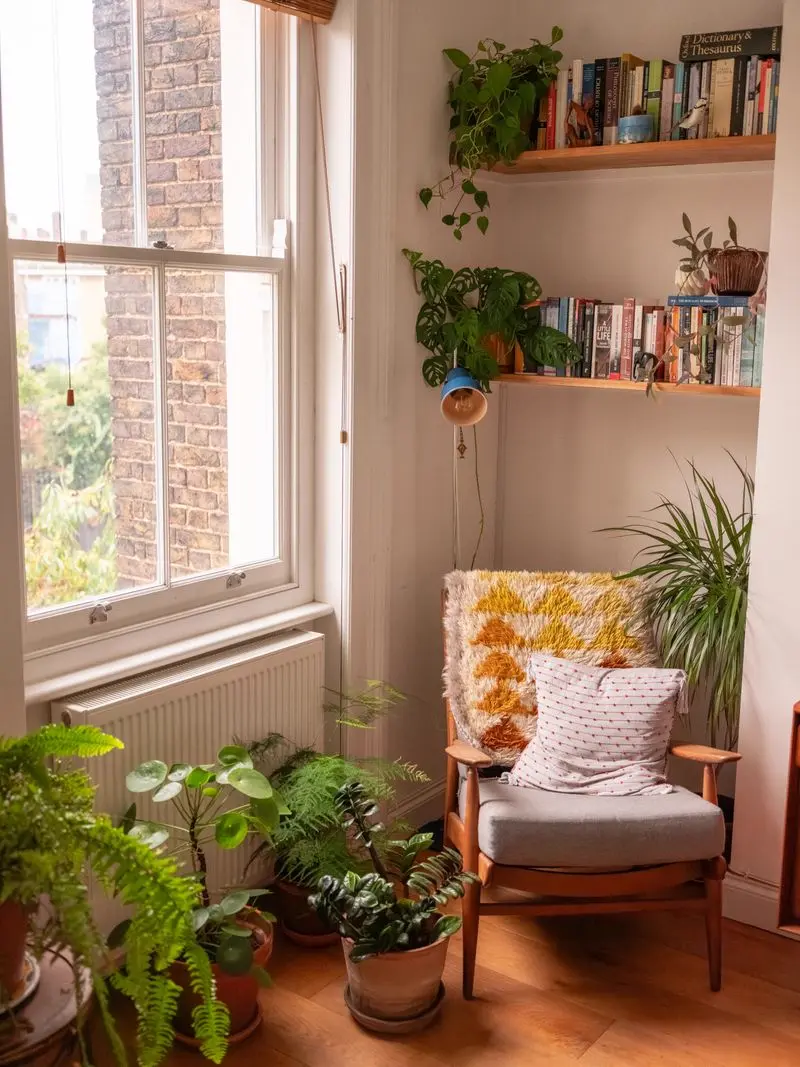
The spaces we spend time in can affect comfort, attention, and routine. You do not need an ideal home, a particular aesthetic, or a larger budget to make one small area feel more supportive.
A home sanctuary is less about aesthetics than about creating a cue for the kind of moment you want to have.
Here are a few ways to create a corner that supports rest or attention, regardless of your budget — if that corner is mostly for stepping away from your phone, our phone-free corner guide covers the practical details.
1. Soften the Light
If overhead lighting feels harsh to you, try a lamp, daylight, or a lower-brightness bulb where safe and practical. Choose lighting based on comfort and visibility, not a promise of a particular nervous-system outcome.
2. Create a Visual Cue
Choose one object that means rest to you — a textured blanket, a ceramic cup, a piece of sea glass — and place it where you’ll see it first when you enter the room. Over time, that object can become a personal cue to pause or rest.
3. The 5-Minute Reset
At the end of each day, take five minutes to restore your space. Fluff the cushion. Put away the clutter. Light a candle. This is not cleaning; it’s a closing ritual that tells your environment (and yourself): the day is done — a small practice of slow living without the performance.
4. Sensory Signature
Choose one sensory element that defines your sanctuary. It might be a scent (lavender, cedar, sandalwood). It might be texture (linen, wool, cotton). It might be sound (rain sounds, silence, a specific playlist). Consistency matters more than complexity.
A home sanctuary is not about how it photographs. It’s about how it feels when no one is watching.
Further reading
- The Ritual of Tea: A Sensory Practice in Three Steps — a simple sensory practice for your sanctuary
- A 90-Second Nervous System Reset — regulation practices that belong in any calm space
- Slow Living Without Escaping Your Real Life — a less performative approach to daily rituals
Sources
- American Psychological Association: Stress resources
- NHS: Every Mind Matters - wellbeing tips
- Slow Living Without Escaping Your Real Life
Continue gently
The Light, Scent, and Texture of a Restful Room
Three small sensory levers—light, scent and texture—can make a room feel more restful. A gentle guide to tuning them one at a time, at any budget.
How to Create a Phone-Free Corner at Home
A practical guide to making one small, phone-free place at home for rest, reading, tea, or a more intentional transition into evening.
The Ritual of Tea: A Sensory Practice in Three Steps
In a world of constant consumption, the simple act of making tea can become a profound practice of presence.